

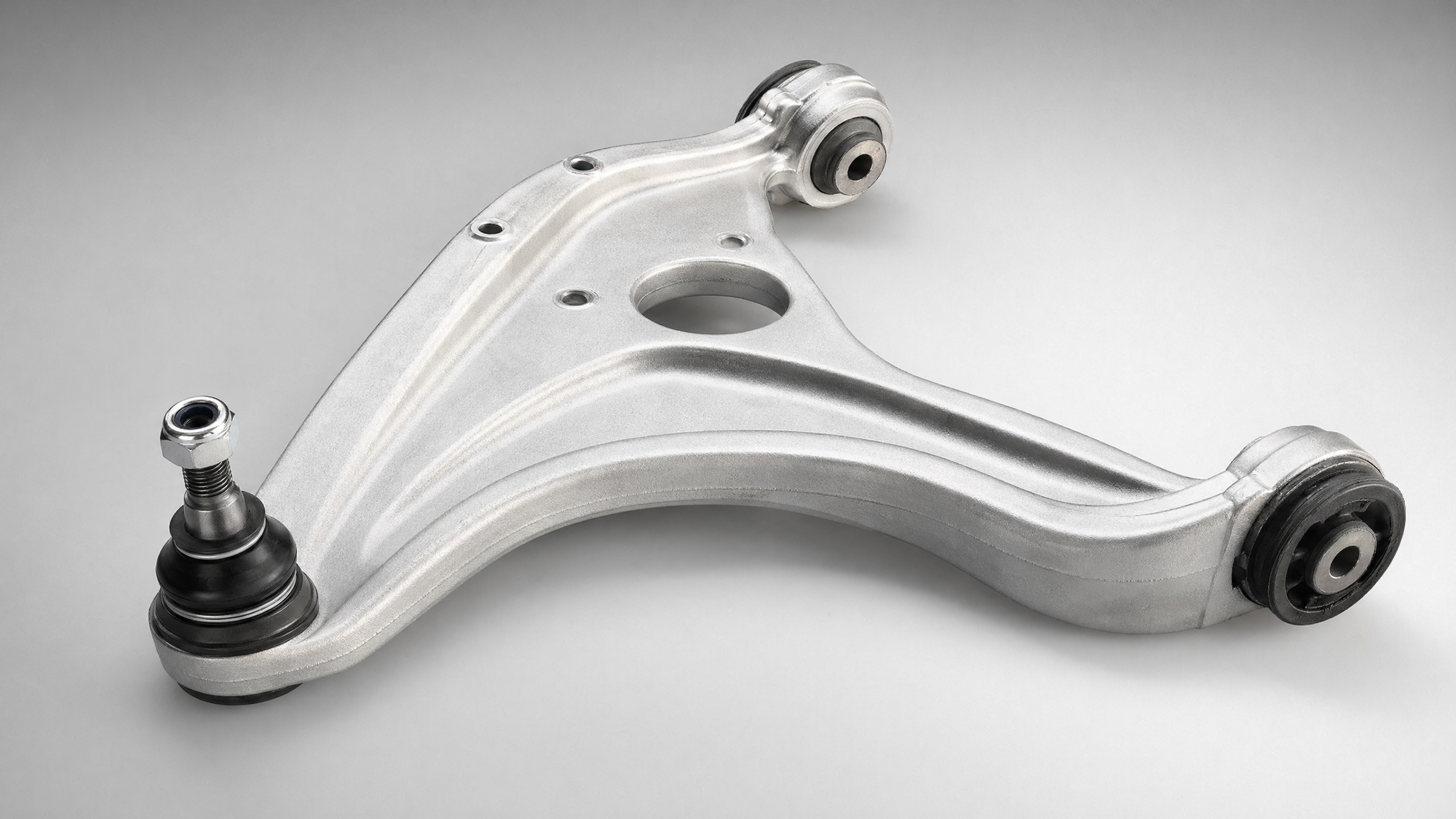
If your car feels "loose" or you hear a clunking sound every time you hit a bump, you might be looking at a failing Control Arm. Whether you are maintaining a 2014 Toyota Camry, a 2011 Ford F-150, or a 2016 Honda Accord, keep an eye out for these common warning signs:
- Steering Wheel Vibration: A shimmy felt through the wheel, especially when speeding up or slowing down.
- The "Clunk": A distinct thud or popping noise when driving over speed bumps or potholes.
- Vague Steering: The car feels like it's wandering or pulling to one side.
- Uneven Tire Wear: Excessive wear on the inner or outer edges of your tread.
But before you spend money on parts, you need to be sure the issue isn't actually your struts, springs, sway bar links, or a hidden issue with your steering knuckle. We believe in "Diagnostic-Led Repair". Follow this professional protocol to confirm if your control arm is truly the culprit and avoid the "Cost of Rework"—the financial loss of installing new parts on a vehicle with an underlying issue.
Step 0: Can You Fix It Yourself?
Before picking up a wrench, assess whether this is a manageable project or a major overhaul.
- DIY Green Light: Proceed if the job is an external component replacement requiring standard wrenches and a jack.
- Red Alert: Seek professional help if the job requires an engine hoist or involves core power systems.
Step 1: Check the Surrounding Components
Ensure the surrounding environment is healthy to prevent damaging new parts.
- The Bounce Test: Push down on the vehicle's corner; if it bounces excessively, the Shock Absorbers (Struts) are likely failing, not just the arm.
- Visual Height: If the vehicle sits unevenly, check for a cracked or collapsed Coil Spring.
- The 6 & 12 O'clock Shake: Jack up the car and shake the wheel vertically. If there is play, your Wheel Bearing is likely dead.
- The 3 & 9 O'clock Shake: Shake the wheel horizontally. Play here points to Tie Rods or steering rack issues rather than the control arm bushings.
Step 2: Electronic Signal Check
Confirm functional damage through vehicle codes.
- Stability Codes: While control arms are mechanical, a severely torn bushing can shift wheel geometry enough to trigger ABS or Traction Control codes.
Step 3: Listen & Feel
Quickly locate the physical damage zone using your senses.
- The Sound: A "Clunking" impact sound often confirms a failed mounting point or torn bushing. A sharp "metallic clicking" may point to ball joints.
- The Sway Bar Interference: If you hear a high-pitched "rattle" or "clatter" over small bumps, check your Sway Bar End Links. Struts and arms usually produce a deeper "thud".
Step 4: Look for Physical Proof
Lock in your specific needs by identifying the "smoking gun".
- Torn Bushings: Look for visible cracks or separation in the rubber—this is the physical evidence of a failed arm.
- Ball Joint Wear: Check if the rubber boot is torn or if there are friction marks near the joints.
- The Knuckle Interface: Inspect where the ball joint meets the Steering Knuckle. If the mounting hole is oval-shaped or stretched, a new control arm won't fix the clunk—you'll need to replace the knuckle too.
Step 5: Pick Your Fix
Choose the solution that matches your specific Year-Make-Model (YMM) diagnosis. Use the table below to determine the best course of action:
| If your diagnosis found... | Recommended Action | Is a full Suspension Kit right? |
|---|---|---|
| Torn Arm Bushings + Rattling Sway Bar Links | Full Front-End Refresh | YES - Includes both wear items. |
| Loose Steering + Uneven Tire Wear | Steering & Suspension Overhaul | YES - Includes Tie Rods for precision. |
| Bouncing Car (Struts are leaking fluid) | Strut Replacement | NO - You need a Strut & Coil Spring Assembly. |
| Bent Steering Knuckle / Bad Wheel Bearing | Major Hub Repair | NO - Kit does not include Knuckle or Bearing. |
| "Clunking" + Multiple high-mileage parts | Proactive Maintenance | YES - Cost-effective to replace all at once. |